
Client
Temple Tree
Location
Narsingi
Type
–
Site Area
64,750 sq. meters
Rooftop Area
32,858 sq. meters
Annual Rainwater Potential
5.58 cr litres
Result - Savings Annually
3.91 cr litres
Rainwater Saved
INR 7822100
Monetary Savings
7111
Water Tankers Saved

Problem
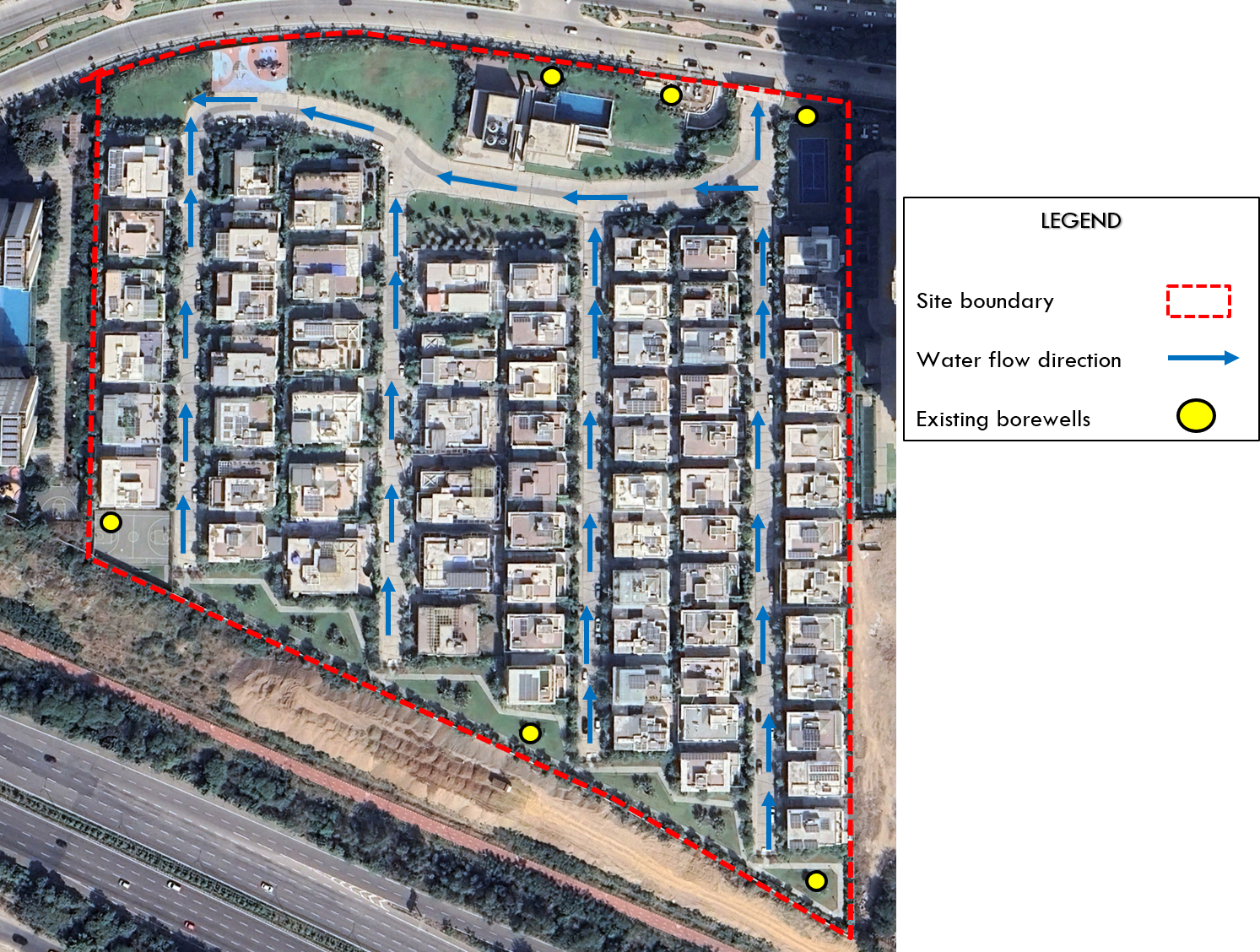
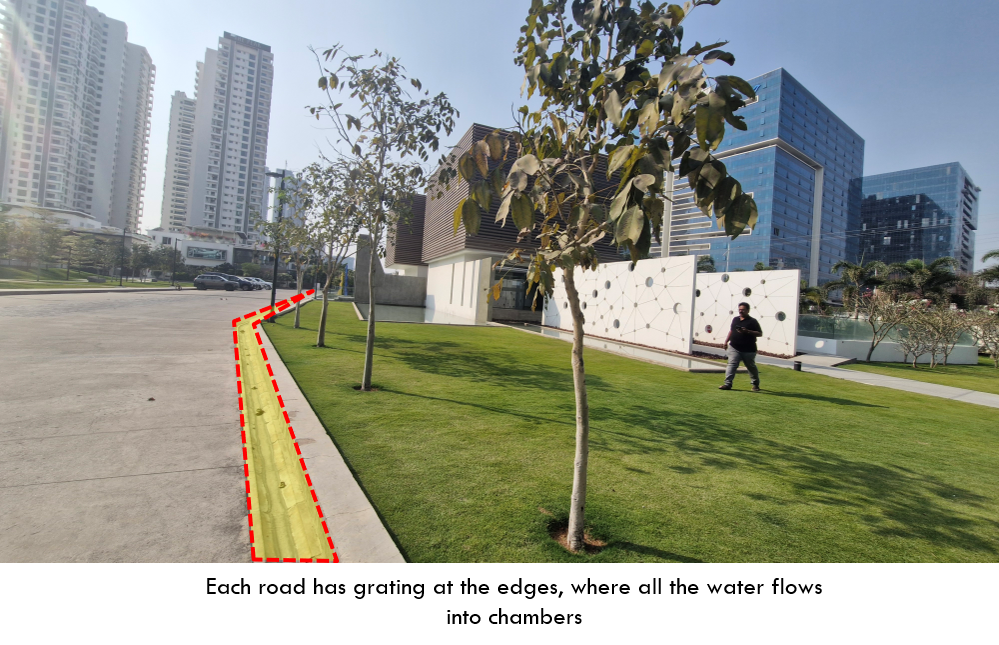
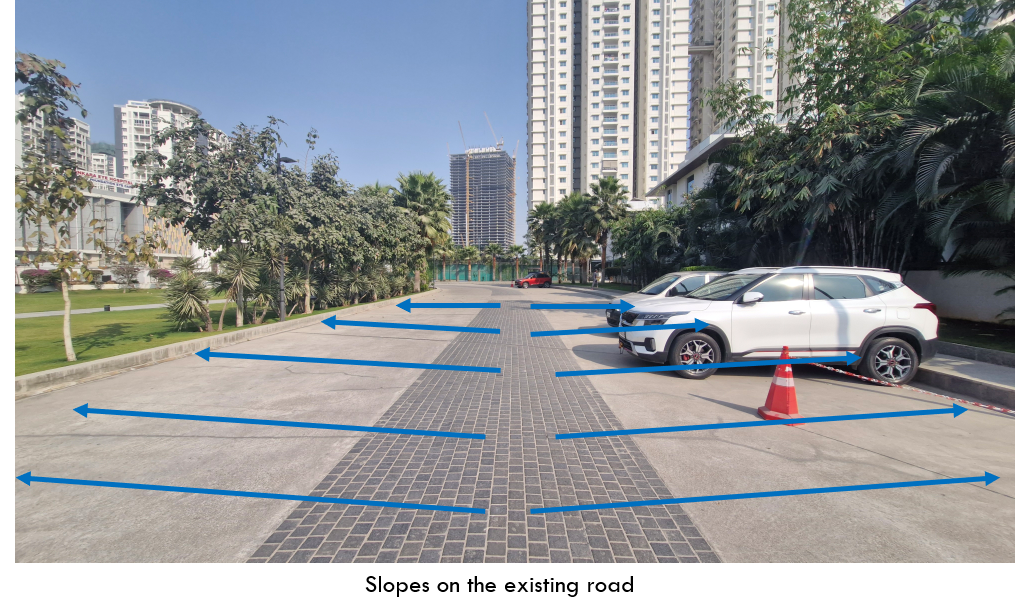
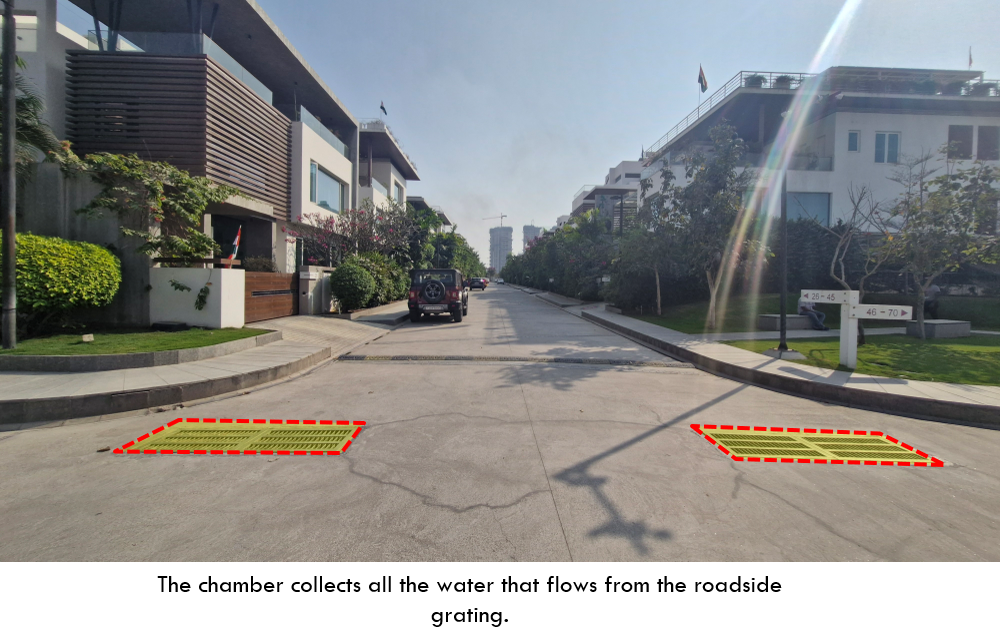
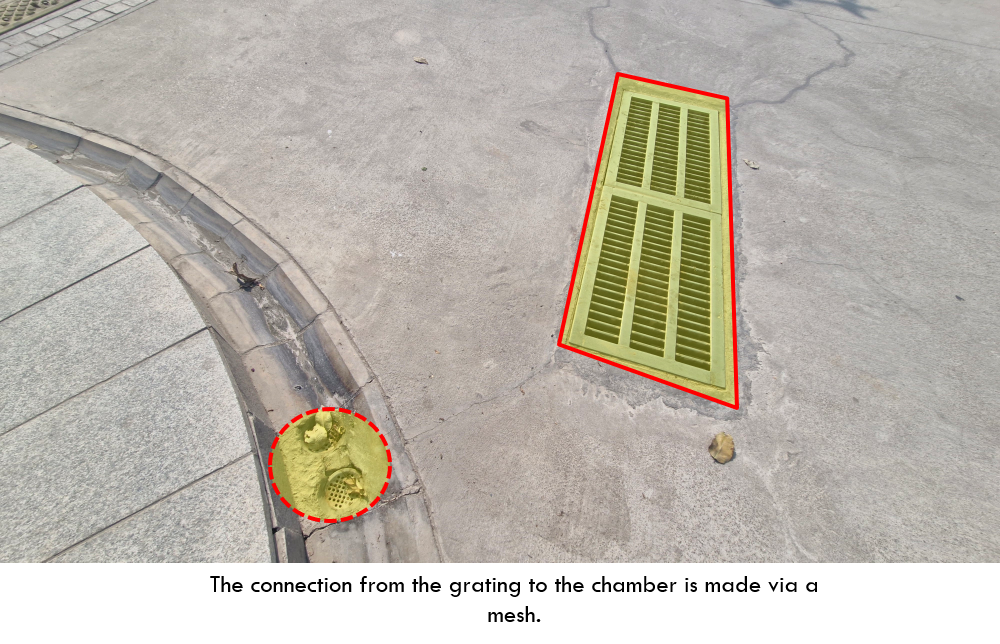
Jayabheri Temple Tree community relies on six borewells, two of which (B1 and B6) are less efficient. While the community consumes around 200 KLD of water daily and has a large 400 KLD sump that combines Manjeera and borewell water, it lacks a centralized rainwater harvesting system. Each villa has an individual pit (2m x 3m), but overall rainwater management is inefficient. Road runoff is directed towards the main gate, where it is stored in a chamber and discharged outside the community, resulting in lost recharge opportunities. Additionally, rainwater stagnates near the entrance during heavy rains, and rooftop runoff from the clubhouse is not utilized for groundwater recharge.
Solution
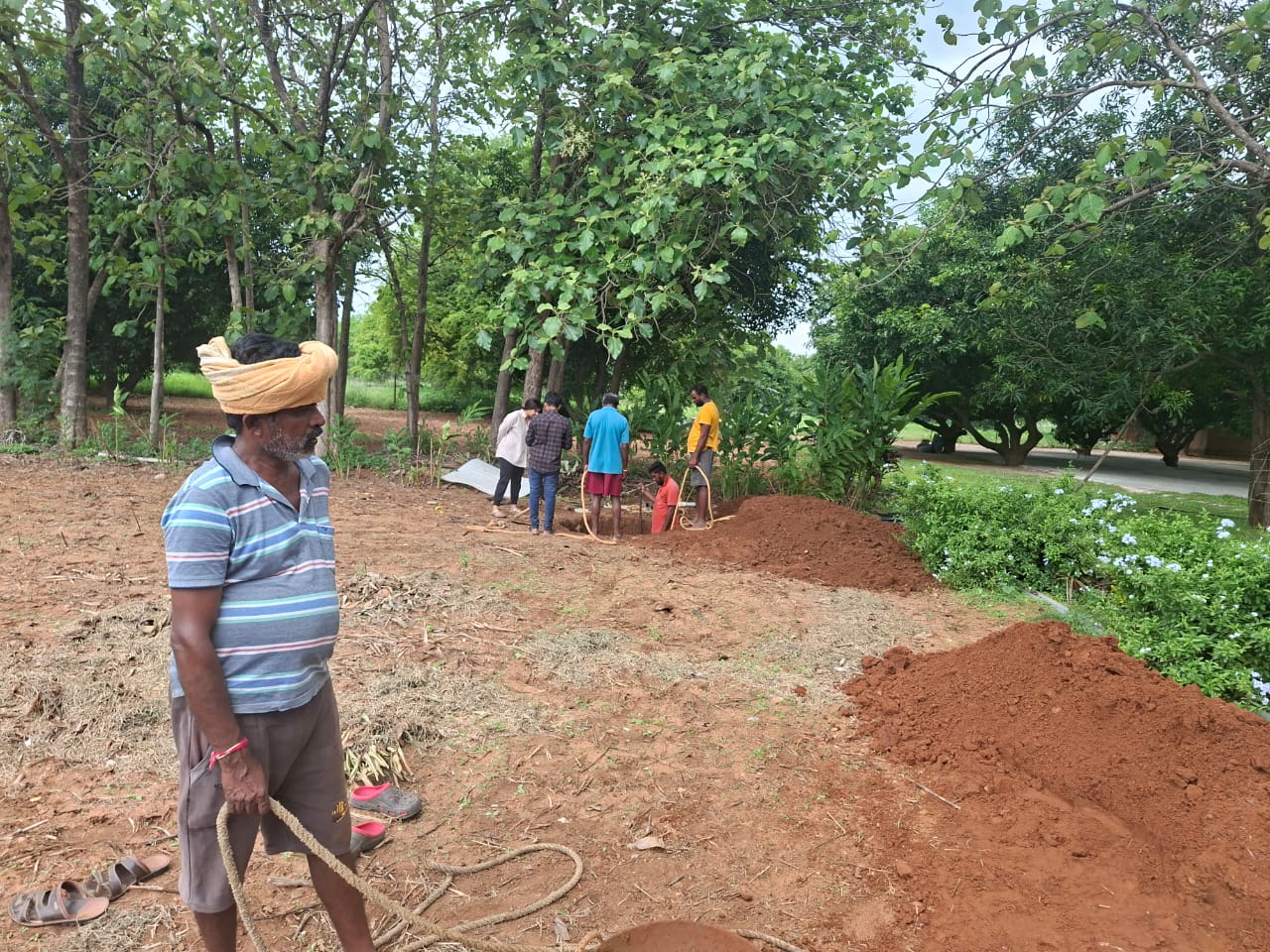
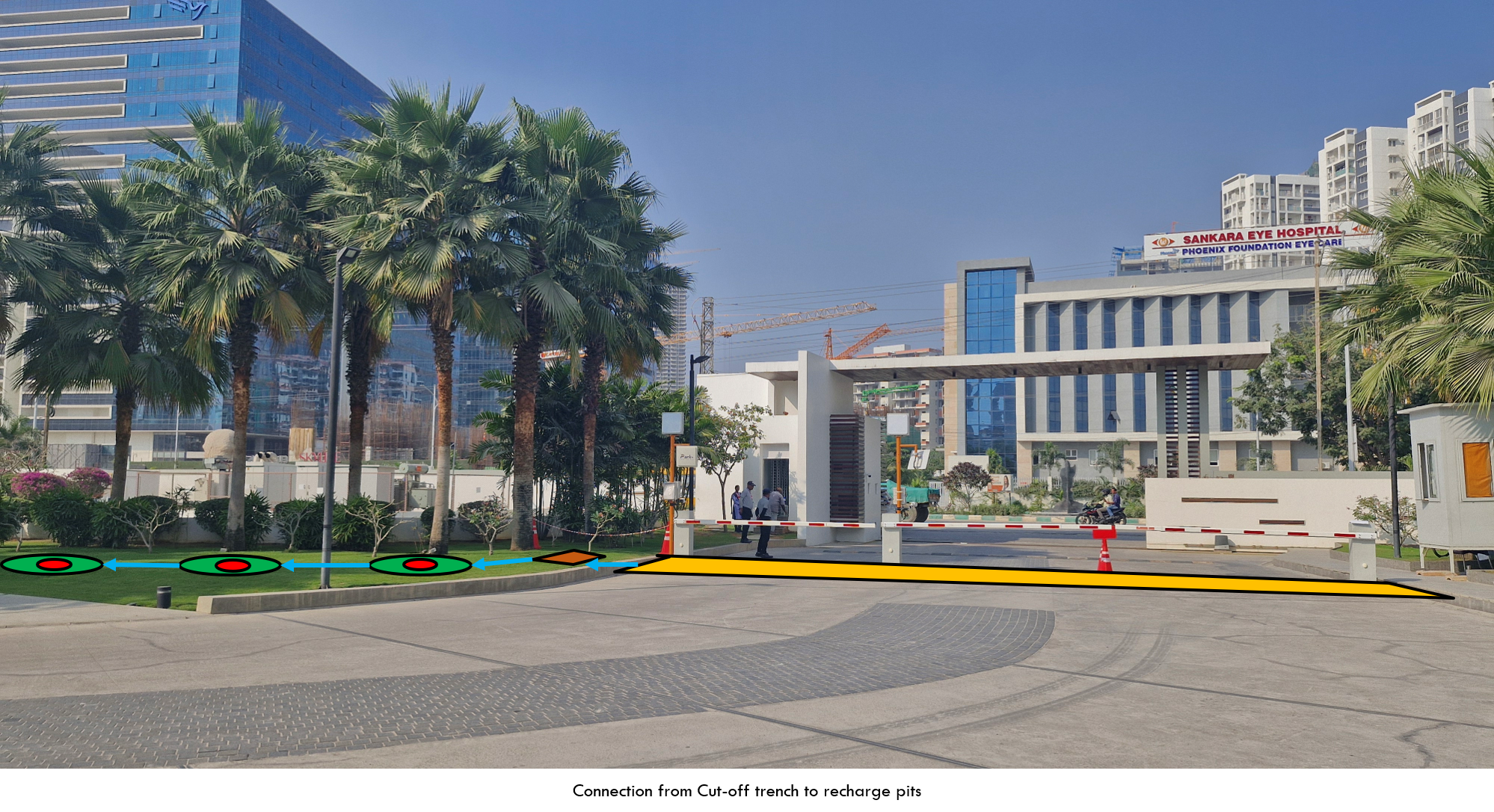
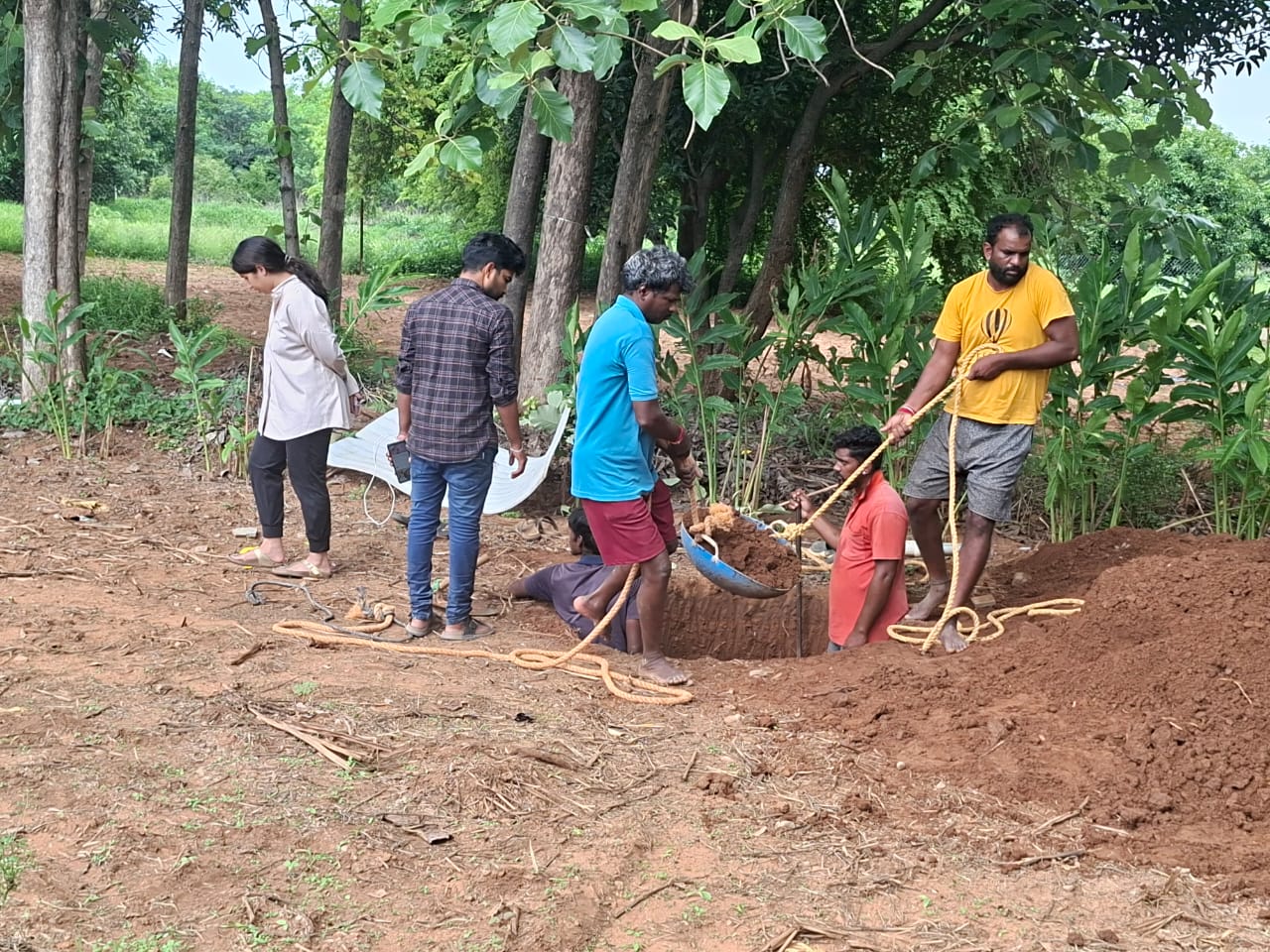
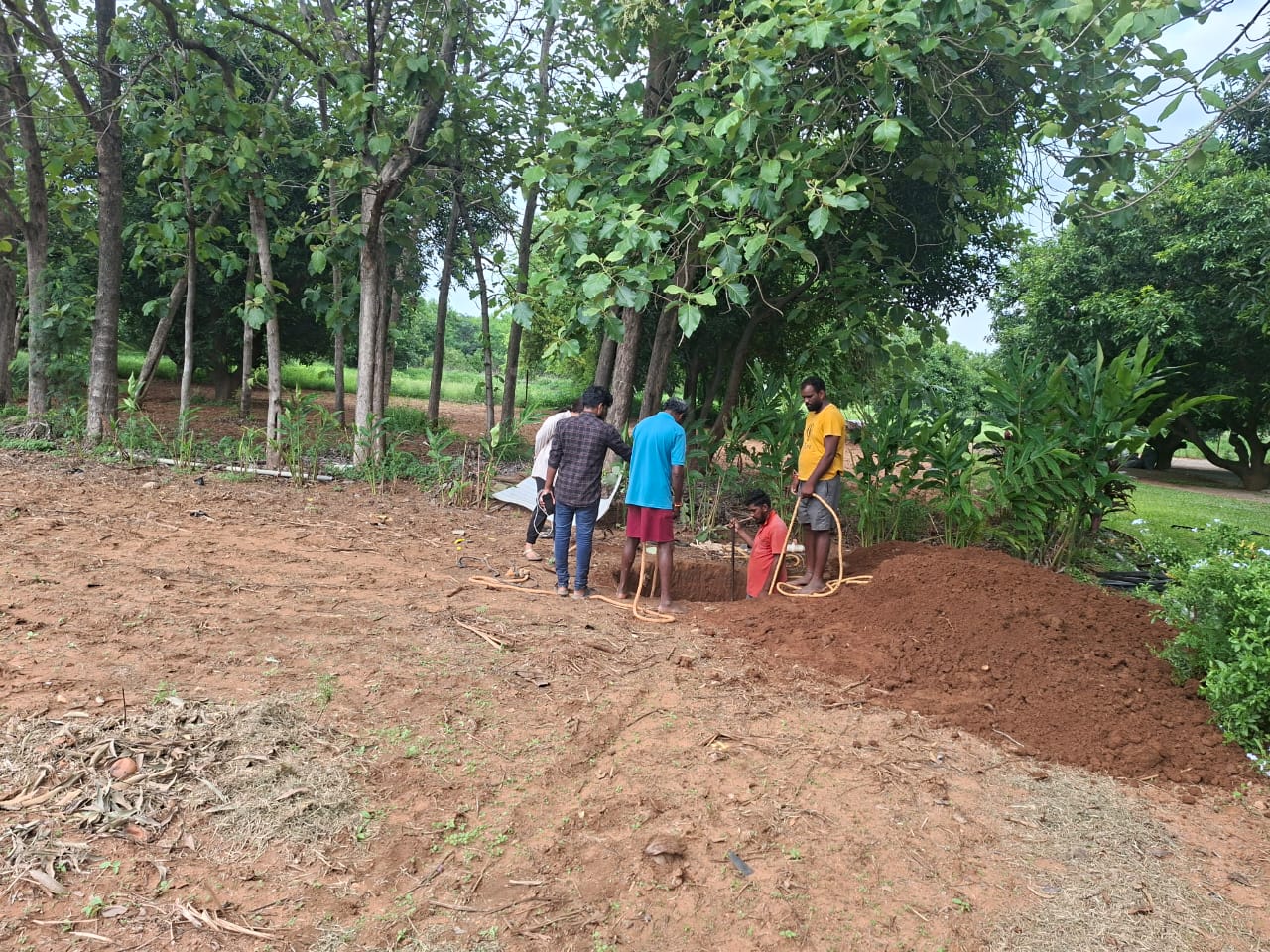
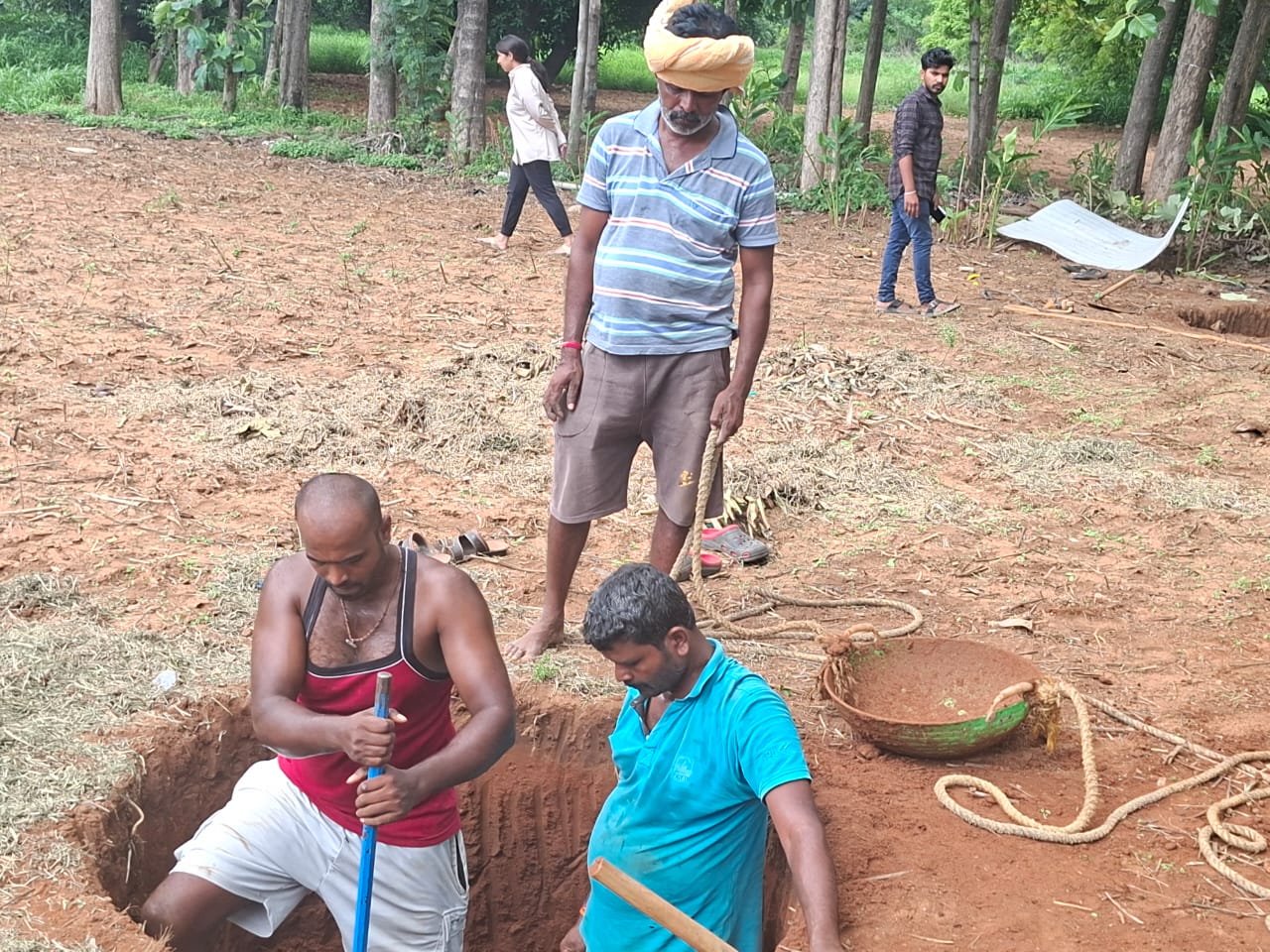
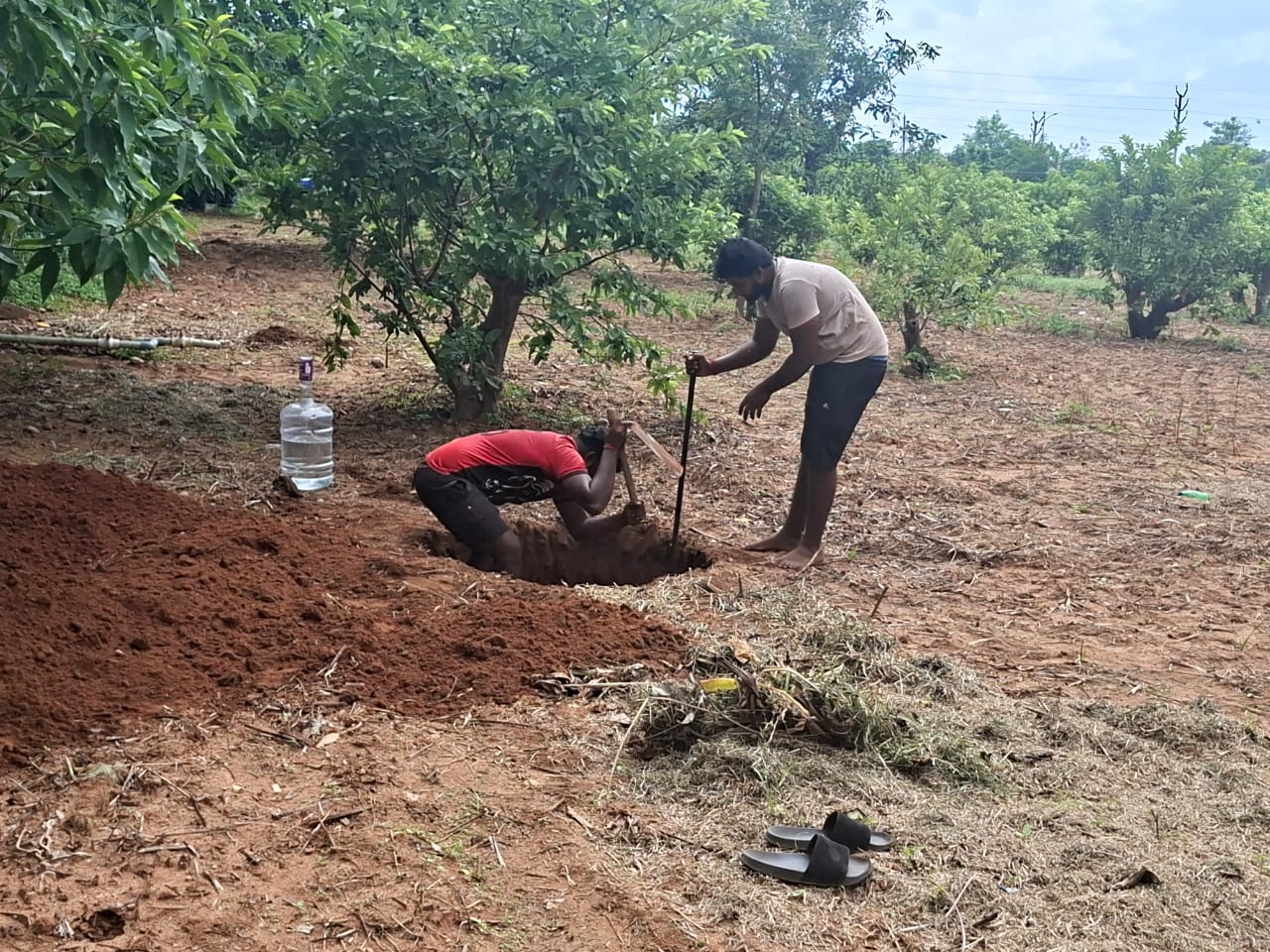
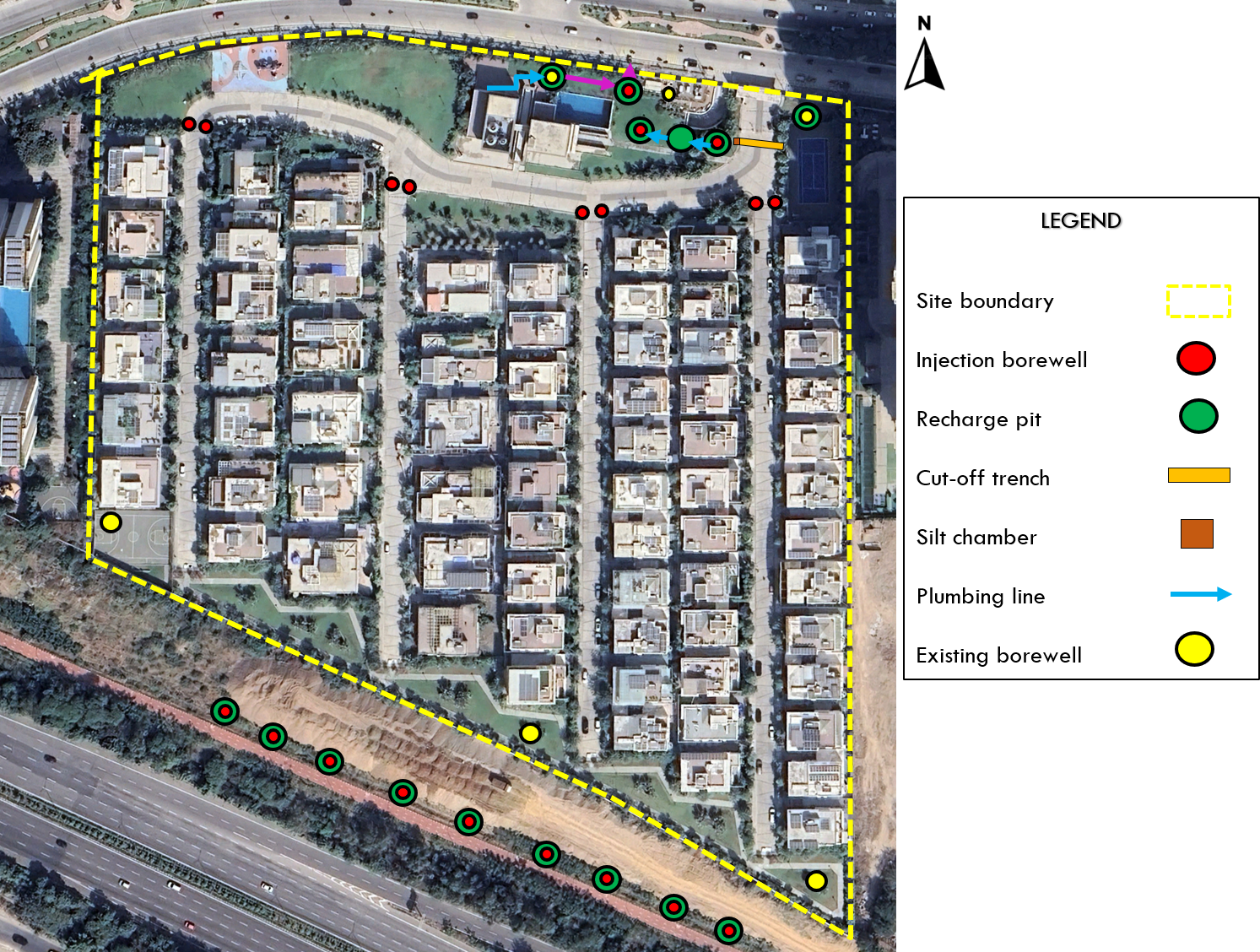
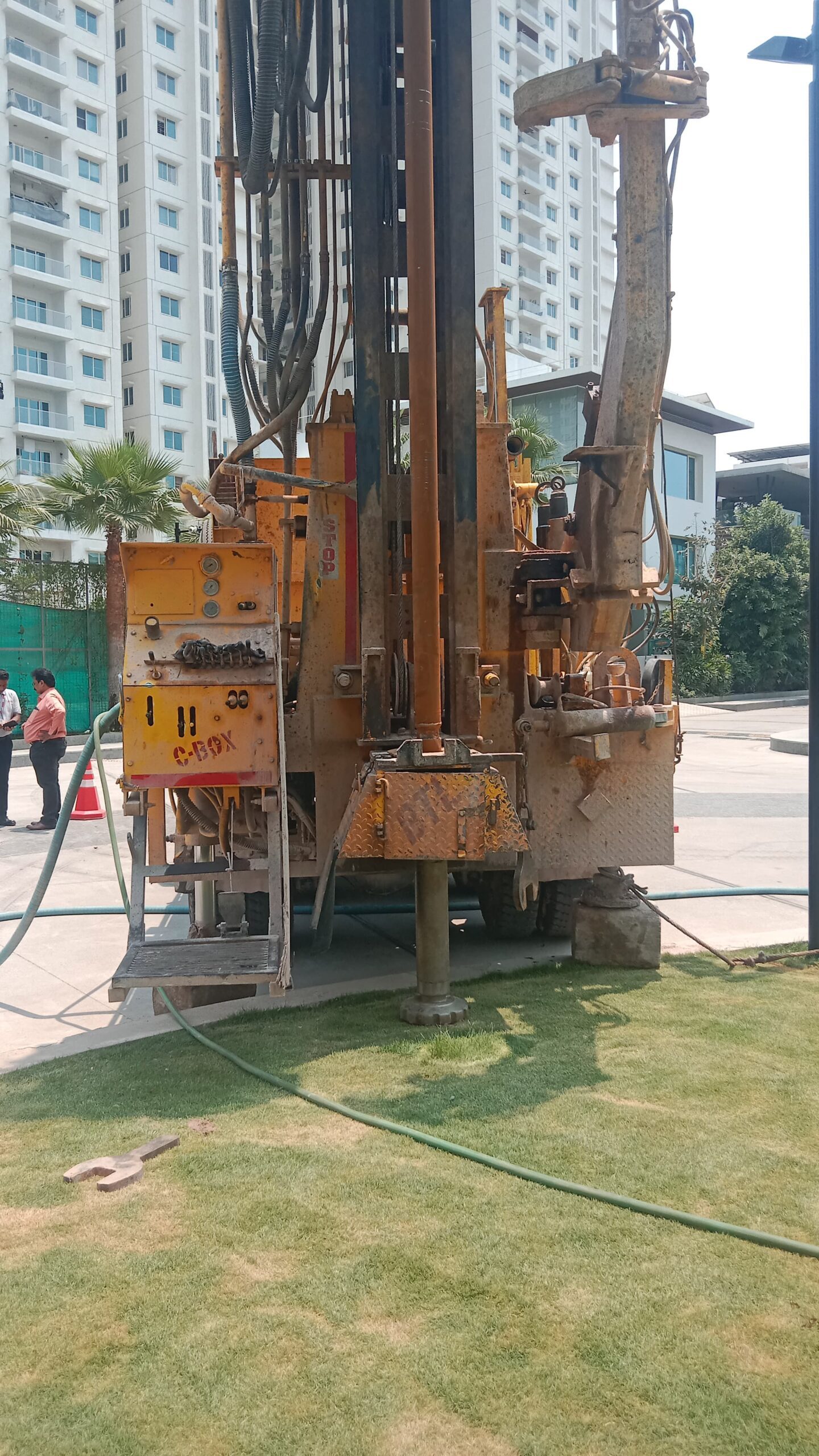
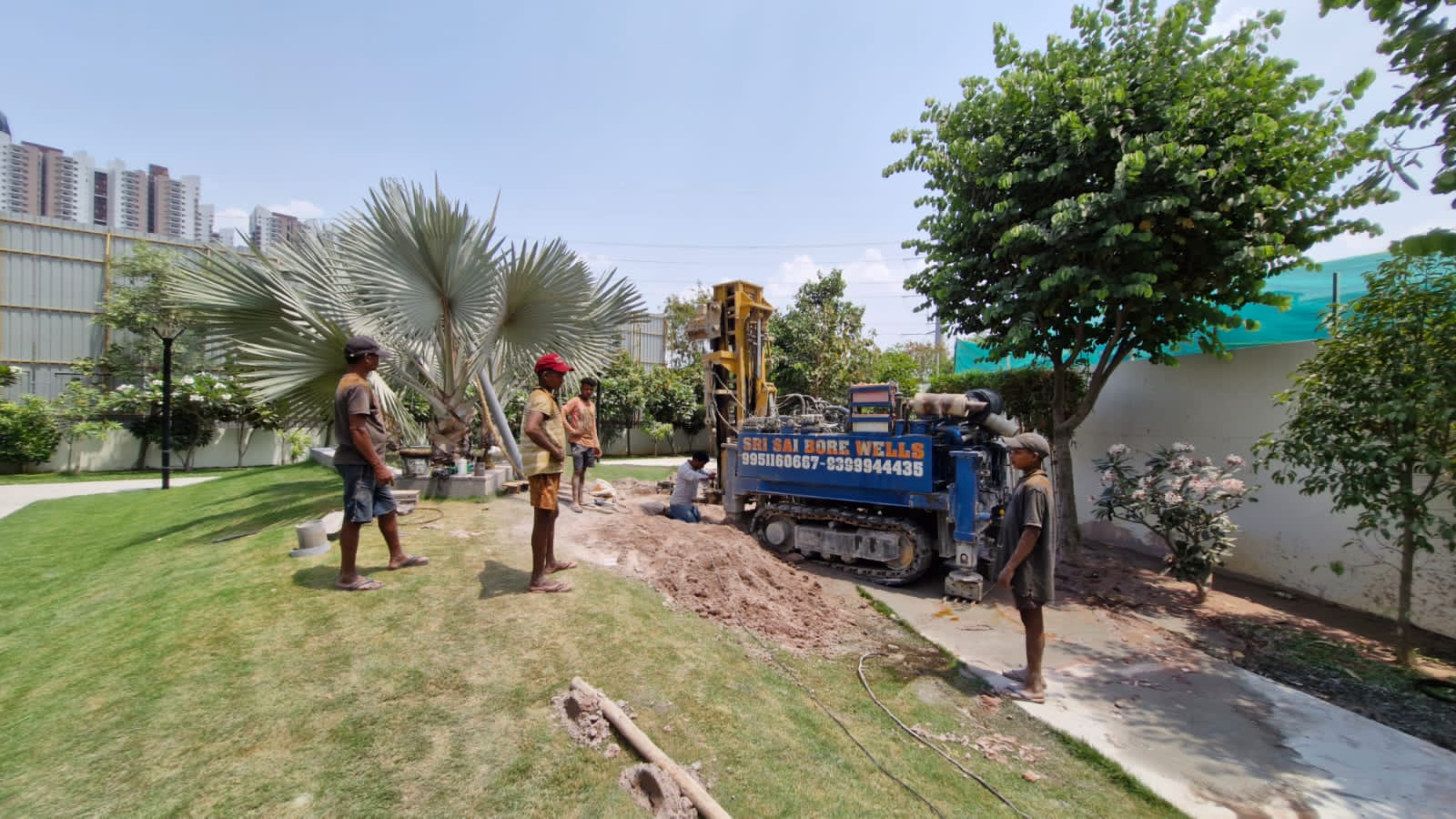
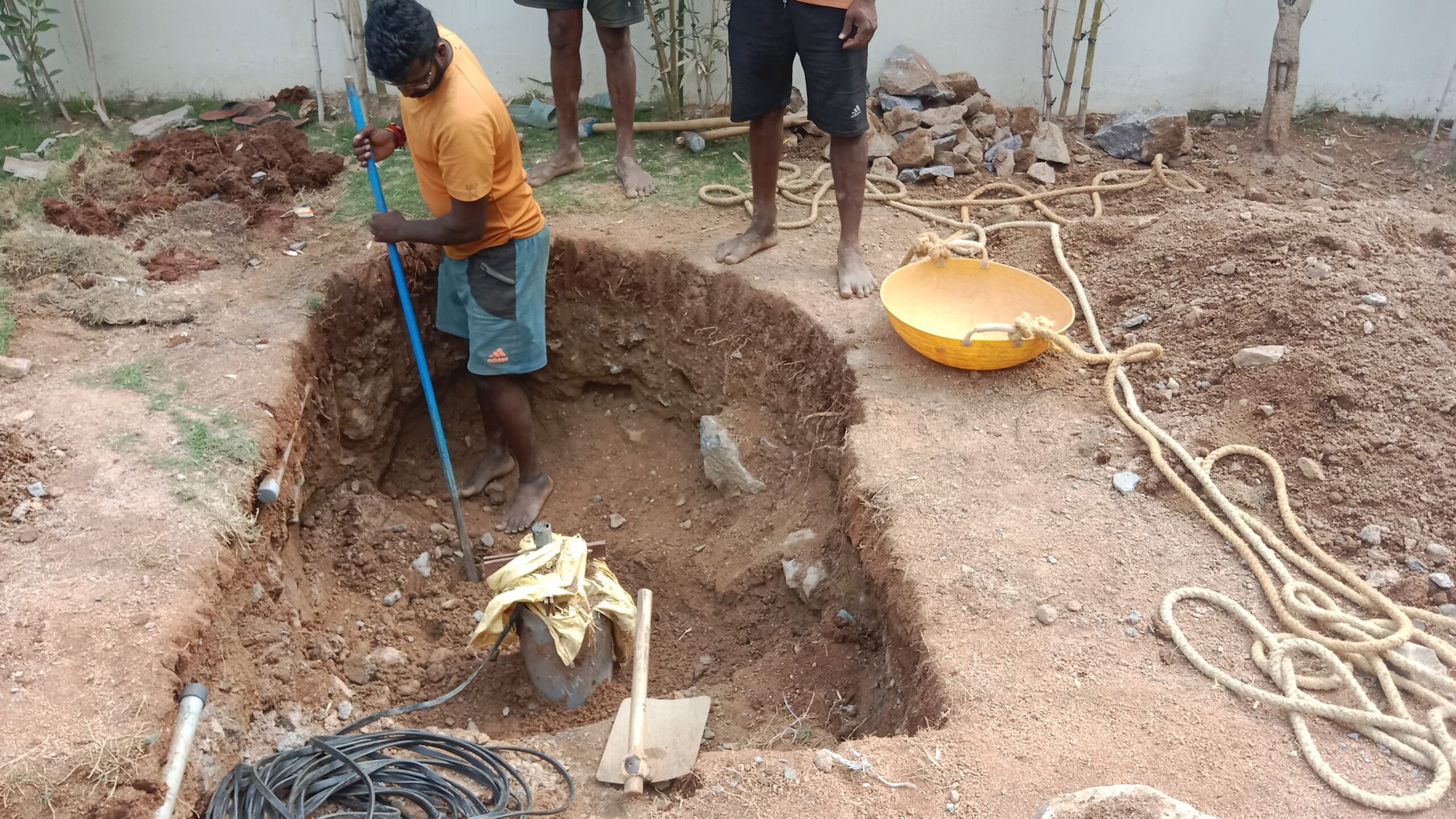
To improve groundwater sustainability, it is proposed to install injection borewells in the rainwater collection chambers located at both ends of internal roads. A cutoff trench should be built near the entrance to capture stagnant rainwater, which will be routed through silt chambers into nearby recharge pits (10 feet deep and 4 feet in diameter) surrounding injection borewells in lawn areas. Rooftop pipes from the clubhouse will be connected to the existing borewell behind the clubhouse, with a recharge pit constructed around it; overflow will be directed to a secondary recharge pit and borewell away from the transformer, with excess water drained externally. Additionally, multiple injection borewells are recommended near the cycling track to support borewells in the southern area, and rainwater from the tennis courts should be routed into a recharge pit near the adjacent borewell. These interventions aim to enhance infiltration, recharge local aquifers, and improve the efficiency of existing borewells.